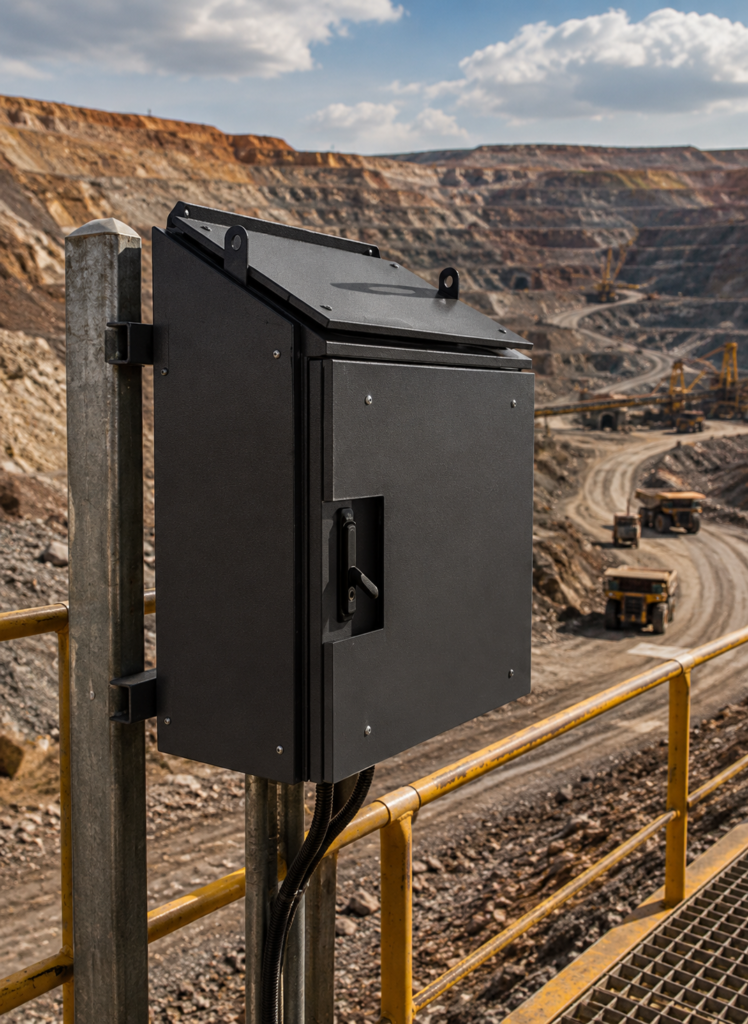
1. Project Overview
Mining and mineral processing sites in Europe often use electrical control cabinets for conveyors, drainage pumps, crushing and screening equipment, remote I/O, communication nodes, and process control systems. These sites are exposed to dust, moisture, rain, snow, low temperatures, vibration, corrosion, and outdoor conditions. Therefore, the cabinet must protect internal electrical components while helping reduce unplanned downtime and long-term maintenance pressure.
2. Client Background
In mining and mineral processing environments, existing electrical control cabinets and field control boxes are commonly used for conveyors, drainage pumps, MCC applications, remote I/O, communication nodes, and marshalling applications. After long-term operation, ordinary cabinets may face corrosion, dust ingress, aging seals, internal condensation, and heat accumulation, which can lead to intermittent tripping, communication failures, control component faults, and unplanned downtime.
3. Typical Technical Requirements
Electrical control cabinets used in mining projects usually need to meet sealing requirements for outdoor high-dust environments. Some high-humidity, corrosive, or outdoor exposed areas may require 316L stainless steel. For distributed installation in remote mining areas, the cabinet should also support multiple field control points. In addition, the cabinet needs to help manage heat generated by internal components such as VSDs and PLCs, while standardized cabinet design can reduce the complexity of spare parts, drawings, installation hardware, and future maintenance.
4. Cabinet Configuration Reference
For mine-spec electrical cabinets, protection requirements such as IP66, IK10, and NEMA 4X can be considered depending on the project environment. Cabinet materials can include 316L stainless steel, 304 stainless steel, galvanized steel, or powder-coated steel, depending on corrosion risk. Options may also include sloped roof structures, sunshields, roof protection parts, mounting plates, cable entries, fan filters, anti-condensation heaters, and other climate control accessories.
5. Applicable Control Systems
This type of cabinet is mainly used to protect VSDs, PLCs, remote I/O, communication nodes, pump control systems, conveyor control systems, MCC applications, and other field electrical control systems. For mining, mineral processing, crushing and screening, and conveyor system projects, cabinet stability, sealing performance, heat dissipation design, and internal layout directly affect long-term system reliability.
6. Project Implementation Support
For mine-spec electrical enclosure projects, ZenviaFab can help review cabinet dimensions, mounting plate layouts, cut-out positions, cable entry locations, accessory lists, packaging methods, and on-site installation notes based on drawings, sample photos, site conditions, and internal component layout requirements. For projects requiring phased installation, delivery can also be planned according to the customer’s mining equipment maintenance schedule or production shutdown window.
7. Application Benefits
By standardizing cabinet structures and accessories, customers can simplify spare parts management, drawing management, and on-site installation management. With standardized cabinet sizes, installation hardware, accessory configurations, and cable entry designs, the same cabinet type can be reused across multiple mining control points, reducing redesign, reconfirmation, and on-site rework time for each site.
8. Long-Term Maintenance Value
The upgraded cabinet structure is more suitable for mining and mineral processing sites in terms of dust protection, moisture resistance, corrosion resistance, and structural strength. By reducing risks related to water vapor, dust ingress, and external corrosion, the operating environment for internal control components becomes more stable, and maintenance windows become more predictable. For mining customers, this helps reduce hidden costs caused by cabinet replacement, repainting, on-site rework, temporary repairs, and unplanned downtime.
9. FAQ
Why are ordinary cold-rolled steel electrical cabinets not enough for mining projects?
Mining sites usually involve high dust, moisture, vibration, outdoor exposure, and corrosion risks. European mining areas may also face winter low temperatures, rain, snow, and internal cabinet condensation. Ordinary cabinets are more likely to suffer from seal failure, corrosion, dust ingress, and heat accumulation.
Do mining electrical cabinets always need 316L stainless steel?
Not necessarily. For areas with high corrosion, high humidity, outdoor exposure, or proximity to chemical processing zones, 316L stainless steel is more suitable. If the corrosion risk is lower but mechanical strength and structural stability are required, powder-coated galvanized steel or other material options can also be considered.
What value can a semi-finished cabinet supplier provide?
A semi-finished cabinet supplier does more than produce the cabinet shell. The supplier can also help review the site environment, internal component layout, cut-outs, mounting plates, heat dissipation, anti-condensation design, rain protection, dust protection, and packaging requirements to help reduce on-site rework risks.
If you are looking for a custom electrical control cabinet shell supplier for mining, mineral processing, conveyor systems, crushing and screening equipment, or pump station control projects, you are welcome to send us your drawings, sample photos, installation environment details, or internal component layout requirements. ZenviaFab can help evaluate the cabinet structure based on your application environment, cabinet size, material requirements, protection rating, cut-out positions, mounting plate layout, heat dissipation method, dust and moisture protection requirements, and export packaging needs, and then provide a custom quotation.
You can send us cabinet dimensions or reference drawings, application environment details, internal component layouts, material requirements, surface treatment requirements, door cut-outs, cable entries, mounting plates, DIN rails, fans or filter requirements, as well as quantity, packaging method, and target delivery schedule. The information does not need to be complete at the first step. Sample photos, old cabinet photos, or basic dimensions can also be used as a starting point for initial discussion.